

-
Who We Are

-
What We Do
- The NDIS
- Your Stories
- Areas
- Contact Us
- Blog
- Resources
- Careers
- Online Safety Training


What Is Prader-Willi Syndrome, and How Do People Find Out If They Have It?
February 19, 2026
If you’ve recently heard the term Prader-Willi Syndrome for the first time, you’re not alone. It’s a condition that many people outside the disability and medical community haven’t come across. But for the families and individuals living with it, it shapes almost every aspect of daily life.
So what exactly is it, how is it identified and what does life look like once you have a diagnosis?
What Is Prader-Willi Syndrome?
Prader-Willi Syndrome (PWS) is a rare and complex genetic condition. It occurs when certain genes on chromosome 15 are missing or not properly expressed. These aren’t genes that are “switched off” by lifestyle or environment. The change happens at conception, which means it’s present from the very beginning of life.
It affects roughly 1 in 10,000 to 1 in 30,000 people worldwide. In Australia, it’s estimated that between 300 and 400 people are living with PWS at any given time, though the true number may be higher given that diagnosis can sometimes be delayed or missed altogether.
PWS is recognised as one of the most common genetic causes of life-threatening obesity. But it is much more than that.
What Causes Prader-Willi Syndrome?
The condition comes down to how chromosome 15 is inherited and expressed. There are three main genetic mechanisms behind PWS:
The most common is paternal deletion, where a section of chromosome 15 inherited from the father is missing. This accounts for around 70% of cases.
The second is maternal uniparental disomy (UPD), where a person inherits both copies of chromosome 15 from their mother, with none from the father. This happens in roughly 25–30% of cases.
The third is a rarer imprinting defect, where both copies of chromosome 15 are present but the paternal copy is silenced and doesn’t function correctly.
In all three situations, the result is the same. Certain genes on chromosome 15 that need to be active, specifically from the paternal side,are not working as they should. This disrupts the functioning of the hypothalamus, a small but critical region of the brain that controls hunger, growth, sleep, body temperature and mood regulation.
What Are the Signs and Symptoms?
Because PWS affects the hypothalamus and multiple body systems, its symptoms are wide-ranging. They also change significantly across different life stages, which is part of what makes the condition complex to manage and sometimes tricky to identify early.
In Newborns and Infants
In the earliest months of life, PWS typically presents as low muscle tone (hypotonia). Babies with PWS are often described as “floppy.” They may have difficulty feeding, sucking or swallowing, and may fail to gain weight adequately. This can initially look like a number of other conditions, which is one reason early genetic testing is so important.
In Toddlers and Children
As children with PWS grow, the picture shifts. The feeding difficulties of infancy give way to what becomes one of the defining features of the condition: an insatiable, chronic hunger. This is not simply a matter of preference or habit. The hypothalamus in people with PWS does not send or receive normal hunger and fullness signals. A person with PWS genuinely does not experience satiety the way most people do. They are neurologically wired to feel constantly hungry, no matter how much they have eaten.
This persistent hunger, known medically as hyperphagia,creates serious risks around obesity-related health complications if food access is not carefully managed.
Alongside hyperphagia, children with PWS may show:
- Delayed motor development, such as sitting and walking later than peers
- Speech and language delays
- Intellectual disability, typically in the mild to moderate range
- Behavioural challenges, including stubbornness, anxiety, repetitive behaviours, and difficulty with change or transitions
- Short stature, often due to growth hormone deficiency
- Small hands and feet
- Hypogonadism (reduced function of the gonads), which can affect puberty and fertility
In Adolescents and Adults
Puberty in PWS is often incomplete or delayed. Hormonal deficiencies mean that many people with PWS have reduced sexual development and are typically infertile. Adults with PWS continue to experience hyperphagia throughout their lives. Without structured support and food management, obesity and its related health consequences, including type 2 diabetes, sleep apnoea, and cardiovascular disease, become significant risks.
Psychologically, adults with PWS may experience anxiety, mood fluctuations, and in some cases symptoms that resemble obsessive-compulsive disorder. Social relationships can be challenging, and many people with PWS benefit enormously from consistent, structured environments and specialist support.
How Is Prader-Willi Syndrome Diagnosed?
This is one of the questions families most commonly ask. The short answer is: through genetic testing. But getting to that point is often a longer journey.
Early Clinical Recognition
For many families, the path to diagnosis begins with a baby who isn’t feeding well, has unusually low muscle tone, or isn’t hitting developmental milestones. A paediatrician may suspect a genetic condition and refer the family for further investigation.
In older children, it might be the sudden, dramatic shift from poor appetite to relentless hunger that raises a flag. Or it could be a combination of features, the distinctive physical characteristics, behavioural patterns and developmental profile, that prompts a clinician to consider PWS.
Genetic Testing
The definitive way to confirm a PWS diagnosis is through genetic testing. There are several methods used:
DNA methylation analysis is the standard first-line test. It can identify around 99% of PWS cases by detecting abnormal methylation patterns on chromosome 15. If this test is abnormal, further testing is done to determine the specific genetic subtype (deletion, UPD, or imprinting defect), which has implications for recurrence risk and, in some cases, characteristics of the condition.
FISH (Fluorescence In Situ Hybridisation) and chromosomal microarray testing can be used to detect chromosomal deletions specifically.
It’s worth noting that standard chromosome tests (karyotypes) do not detect PWS. If you or a family member has had a chromosome test that came back “normal,” that does not rule out PWS. Specific methylation testing is needed.
Prenatal Diagnosis
For families who have already had a child with PWS, prenatal diagnosis is possible in subsequent pregnancies through chorionic villus sampling (CVS) or amniocentesis, followed by methylation analysis.
In some cases, PWS may be suspected during pregnancy if reduced foetal movement or unusual positioning is noted on ultrasound, though this alone is not conclusive.
Diagnosis in Adults
It is not unheard of for PWS to be diagnosed in adulthood, particularly in people born before genetic testing became widely available. If you are an adult, or you’re supporting an adult, who has unexplained intellectual disability combined with obesity, hyperphagia and some of the physical and behavioural features described above, it may be worth speaking with a clinical geneticist.
What Happens After a Diagnosis?
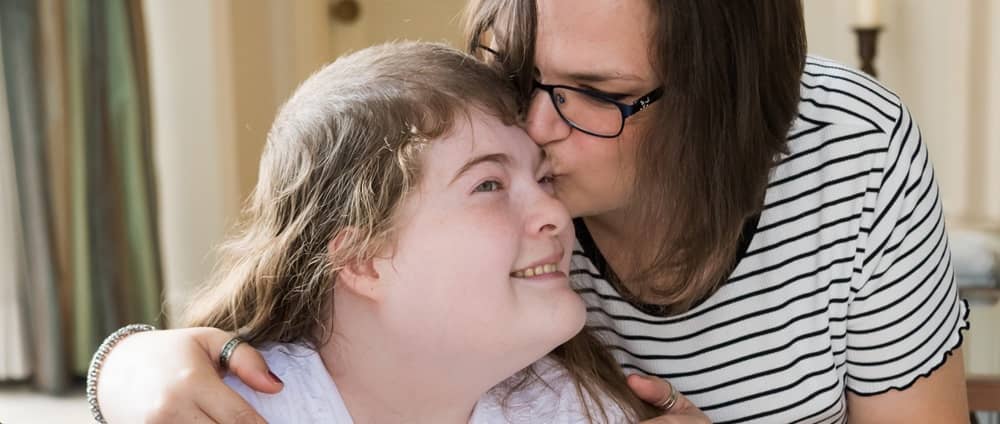
A diagnosis of PWS can come with a complex mix of emotions. For parents of a newly diagnosed child, there may be grief, relief at finally having answers, fear about the future, and many questions about what comes next. For adults who receive a late diagnosis, there can be a profound sense of things finally making sense.
The important thing to know is that with the right supports in place, people with PWS can lead rich, meaningful lives. There is no cure, but there are evidence-based treatments and management strategies that make a real difference.
Food management is central to day-to-day life. This typically means strict limits on food access in the home and in any environment where the person with PWS spends time. It also means structure, routine and emotional support, because the experience of constant hunger is genuinely distressing.
Behavioural support, speech therapy, occupational therapy and physiotherapy all play important roles. And as a person with PWS moves into adulthood, access to specialist disability support services becomes increasingly important.
Living Well with Prader-Willi Syndrome
People with PWS are individuals first. They have unique personalities, interests, strengths and goals. Many people with PWS work, build friendships, enjoy recreational activities and contribute meaningfully to their communities.
What they need is support that understands the specific demands of the condition. That means carers and support workers who are trained in PWS, environments that are set up to safely manage food access, and services that take a person-centred approach.
At Interaction Disability Services, supporting people with Prader-Willi Syndrome has been central to our work for decades. From supported accommodation to community access and self care, our teams are experienced in working alongside people with PWS and their families. We also provide behaviour and allied health services that can assist with the behavioural and psychological aspects of the condition.
If you’d like to understand how the NDIS can fund supports for someone with PWS, our support coordination team can help you navigate your plan and access the right services.
For further reading on PWS, the Prader-Willi Syndrome Association Australia (PWSA) is an excellent resource for families, individuals and healthcare professionals alike.
Ready to Talk to Someone Who Understands?
If you are a parent who has just received a diagnosis, a family member trying to understand what support looks like, or an adult living with PWS who is exploring your options, we’re here to help.
Interaction has been supporting people with Prader-Willi Syndrome and their families since 1991. We understand the condition deeply, and we know that the right support genuinely changes lives.
Get in touch with our team today to find out how we can support you or your loved one.